
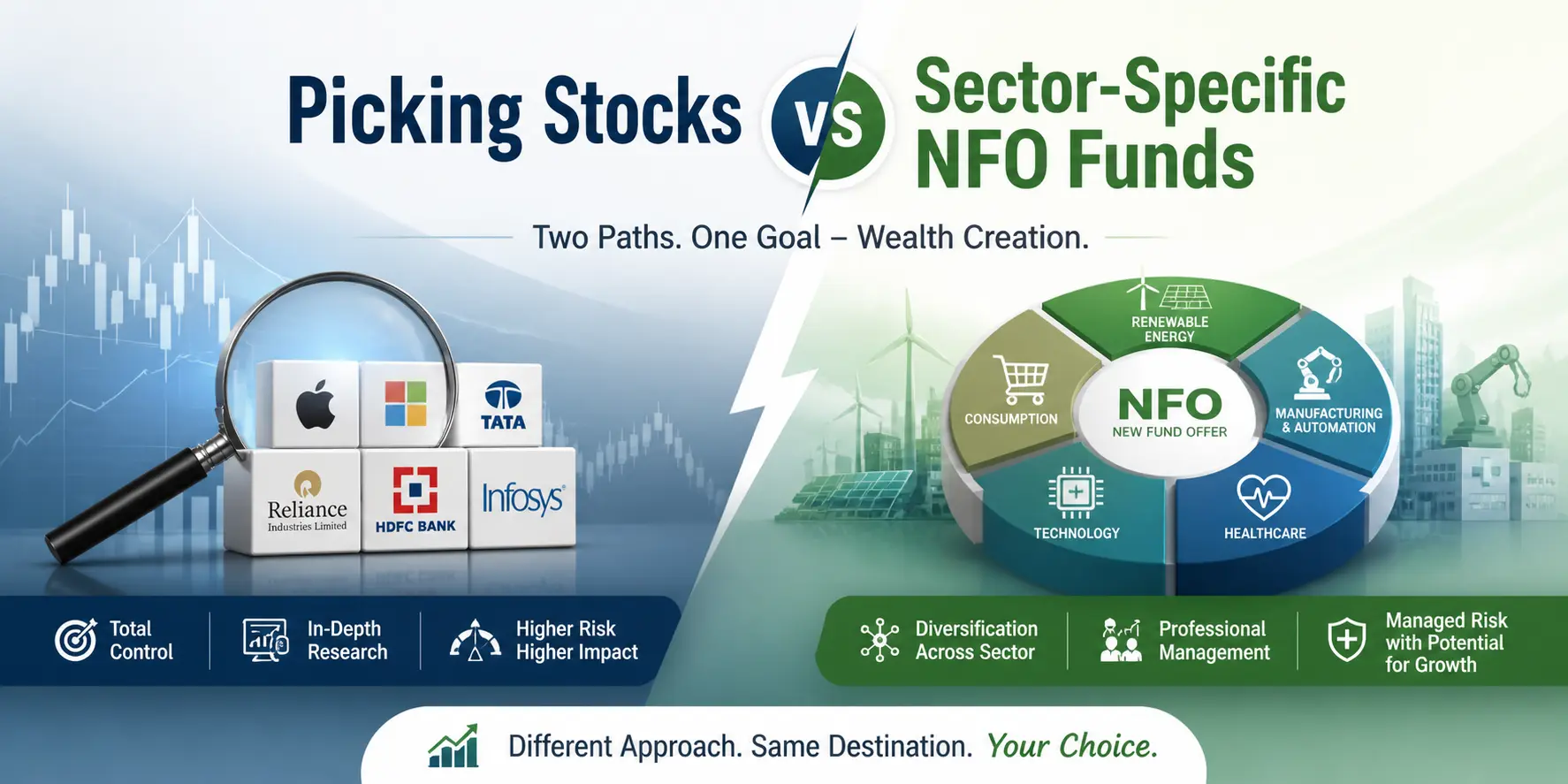
Let’s be honest—most investors have argued with themselves at some point about this exact thing. Do you back a company you believe in and buy its stock directly, or do you let a professional fund manager handle a whole sector for you through a newly launched fund? It is one of those debates that doesn’t have a clean winner, but understanding the real differences between these two approaches can save you from making a choice that doesn’t actually suit the investor you are right now.
What Does It Mean to Pick Individual Stocks in Today’s Market?
Picking stocks today is harder than it looks from the outside. Markets move fast, information spreads instantly, and the obvious opportunities get priced in before most retail investors even notice them. When you buy a stock, you are making a specific bet on one company’s future. The Physics Wallah share price is a good real-world example of what this looks like in practice. It has moved from a 52-week low of ₹77 all the way up to ₹161, and back down to around ₹110 today. That kind of range tells you two things clearly: there is genuine opportunity here, but you need to know exactly why you are buying and at what level you would exit, or the volatility will make the decision for you.
What Is a New Fund Offer and How Do Sector-Specific NFO Funds Work?
A new fund offer is the subscription window when a mutual fund scheme launches for the first time, offering units at a flat base NAV of ₹10. Sector-specific versions of these focus entirely on one industry—healthcare, technology, infrastructure, or even EdTech. Instead of picking one company, the fund manager builds a diversified basket of companies within that sector. You get broad exposure to an industry theme without having to decide which single company will ultimately win the race within it. It is a more structured, less emotionally taxing way to back a macro trend you believe in.
How Do Risk and Return Differ Between Stocks and Sector NFO Funds?
With individual stocks, your risk is concentrated. One bad earnings report, one unexpected regulatory change, or one management scandal can hurt your position very quickly and very specifically. Sector funds soften that by spreading the exposure across many companies, but here is the thing—if the whole sector falls out of favor, neither option saves you. The return potential with individual stocks is genuinely higher if you do the research and get your timing right. But most people don’t, and that gap between potential and reality is where a lot of money quietly disappears.
When Should You Choose Stocks Over Sector-Specific NFO Funds?
Stock picking makes real sense when you have done the work. If you understand a company’s business model, its competitive position, its debt situation, and what could realistically go wrong, then owning the stock directly gives you full control and maximum upside. It also makes sense when you want the flexibility to exit quickly or add to your position at specific price levels, rather than being tied to a fund’s structure or redemption terms.
When Do Sector-Specific NFO Funds Make More Sense?
The new fund offer is the smarter choice when you have conviction in a sector’s long-term story but aren’t confident enough to bet on any one company within it. Maybe you believe EdTech will grow significantly over the next decade but aren’t sure whether that growth will be captured by one dominant player or spread across several smaller ones. A sector fund handles that uncertainty for you. It also works well for investors who genuinely don’t have the time to monitor individual positions and would rather trust a professional manager to make those calls.
How Can You Balance Both Strategies in Your Portfolio?
The honest answer is that most investors don’t have to choose just one. Use sector funds as your structured foundation for industry-level exposure, and reserve individual stock positions for your highest-conviction ideas where you have genuinely done the research. Keep individual positions smaller if you are still building your analysis skills. Review your overall allocation every few months to make sure the balance still reflects your goals and your actual risk tolerance.
Conclusion
Stocks and sector funds solve different problems for different investors. One gives you precision and higher upside; the other gives you structure and managed risk. The best portfolio isn’t the most complex one—it is the one that honestly reflects what you know, what you can handle emotionally, and what you are actually trying to achieve financially.