

If you have ever watched a stock price move up and down on your phone and wondered, “Where do my shares actually live?” the answer is simple.
They live inside a Demat Account.
In India today, you cannot buy shares, invest in IPOs, or hold ETFs without one. This guide explains what a demat account is, how it works, its charges and how to open it step by step, using clear words, real examples and Indian context.
What Is a Demat Account?
A Demat Account holds your shares and securities in electronic form, just like a bank account holds money. Instead of paper certificates that can tear, fade, or get lost, your investments sit safely in digital format.
How Does a Demat Account Work?
Think of the process like ordering groceries online.
- You place an order using a trading app.
- The stock exchange confirms the trade.
- Your shares move into your demat account.
- Money moves from your bank account.
Everything happens quietly in the background. In 2026, most liquid stocks now follow Instant Settlement (T+0), meaning your holdings can update almost immediately after you buy them.
Types of Demat Accounts in India
- Regular Demat Account: Best for resident Indians.
- Repatriable/Non-Repatriable: For NRIs.
- Basic Services Demat Account (BSDA): Meant for small investors. Updated for 2026: You can now hold up to ₹10 lakh in securities with significantly lower or zero AMC (Annual Maintenance Charges) depending on your balance slab.
Benefits of a Demat Account
- Safety: Your shares stay protected under SEBI rules. Even if your broker closes, your shares remain safe with the central depositories (NSDL or CDSL).
- Speed: Settlements are faster than ever with the transition toward instant settlement.
- Easy Tracking: One dashboard for shares, mutual funds, ETFs and government bonds.
- Automatic Credits: Dividends and bonuses land directly in your linked bank account.
Demat Account Charges Explained
- Account Opening Charges: Often ₹0 with discount brokers.
- Annual Maintenance Charges (AMC): Usually ₹300–₹750 per year (waived for many BSDA users).
- Transaction Charges: Small fees applied when you sell shares.
- Taxes & GST: Standard government taxes apply.
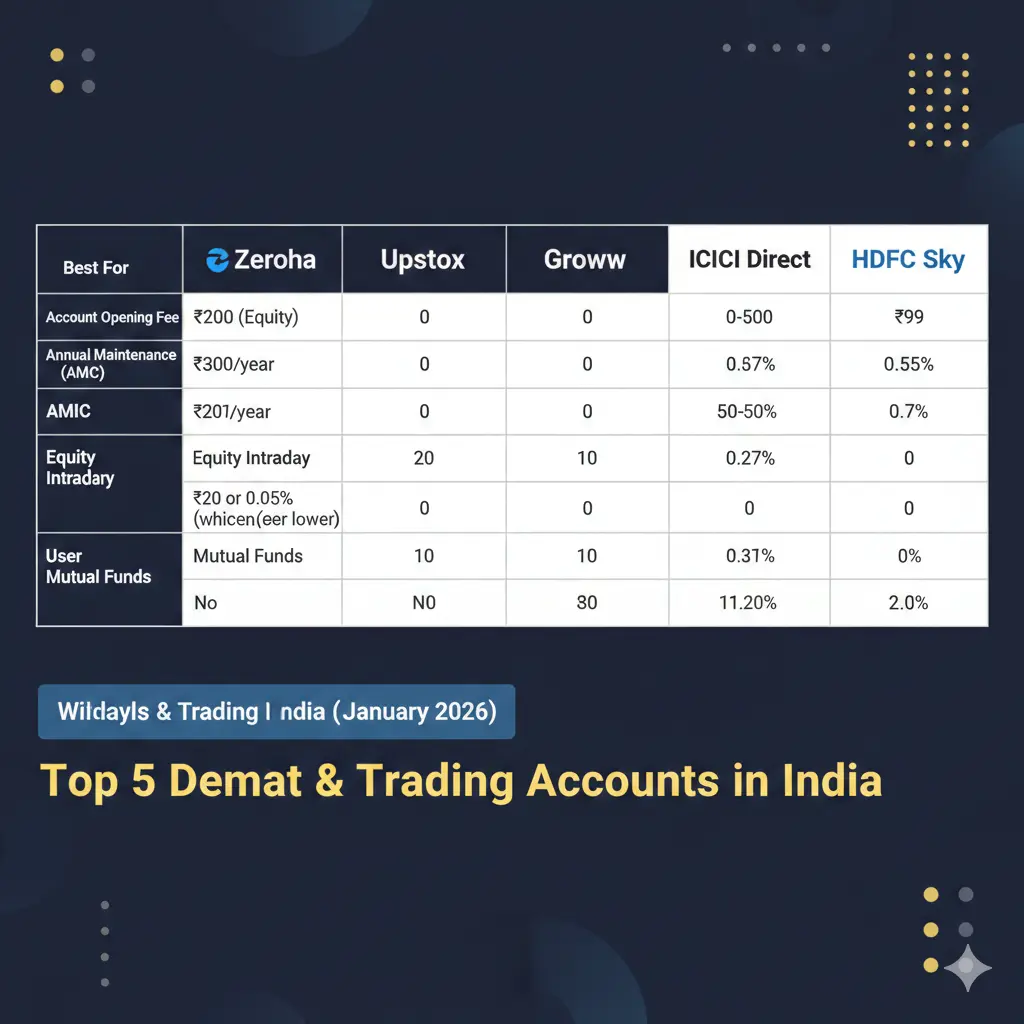
How to Open a Demat Account (2026 Step-by-Step)
- Choose a Broker: Pick a bank or a discount broker based on your needs.
- Keep Documents Ready: PAN card, Aadhaar card and Bank proof.
- Complete Online KYC: Use DigiLocker to instantly fetch your documents for a paperless experience.
- Add a Nominee (Mandatory): You must now declare a nominee to ensure your investments are easily passed to your family. Accounts without nominees risk being frozen.
- E-Sign: Use Aadhaar-based OTP to sign your application.
Is a Demat Account Safe?
Yes. Demat accounts operate under the strict supervision of SEBI. Your shares are held by NSDL or CDSL, not the broker. To stay safe:
- Never share OTPs.
- Check your monthly SMS/Email statements from the depository.
- Use Two-Factor Authentication (2FA) on your trading app.
Final Thoughts
If you plan to invest in India even once a year you need a demat account. It removes paper stress, speeds up transactions and gives you full control over your wealth. The setup takes less time than a coffee break.
FAQs:
Yes, for almost all stock market investments in India.
Yes, you can open accounts with different brokers.
AMC may still apply. If you don’t plan to use it for years, it is better to close it or convert it to a BSDA.